

Kefir is a product of milk fermentation originated in Caucasus and Tibet. It is made by using kefir grains, cauliflower-looking gelatinous beads that contain a variety of bacteria and yeasts, which ferment the milk in room temperatures for a minimum of 24 hrs period.
What makes kefir superior to other probiotic milk products like yoghurt or cheese, is the amount and quality of probiotic bacteria. While yoghurt has 4 to 7 strains of bacteria, more than 40 can be found in kefir like lactobacilales or Lactic Acid Bacteria among others! These active bacterial cultures help to maintain the natural balance of gut microbiota and overall gastrointestinal health.
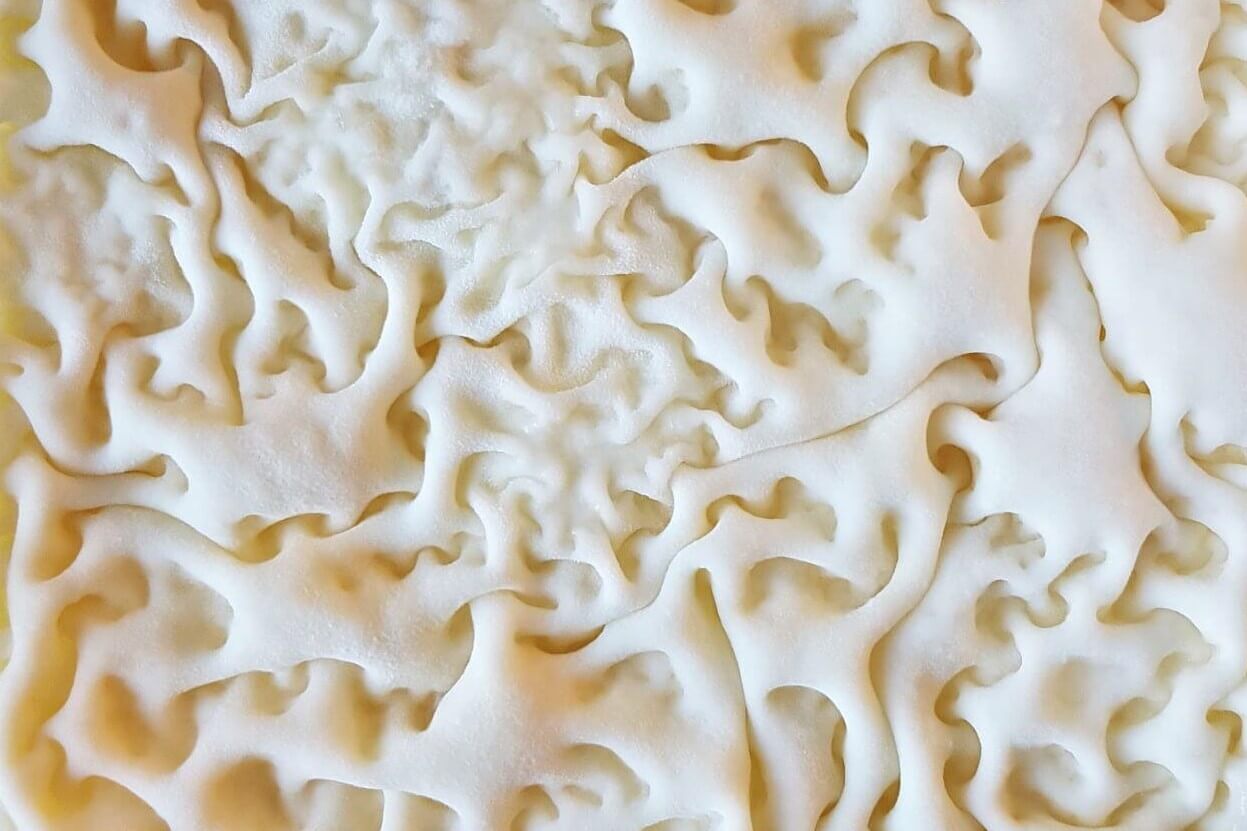
The art of kefir: The crust of kefir after 2 days of fermentation.
Even though the nutritional composition of kefir varies according to the microbiological composition of the grains used, the temperature and length of fermentation process and the milk used, the health benefits are substantial. This is not only historical proven, but currently a great deal of systematic studies supports that a regular consumption of kefir has numerous health advantages:
- Improves digestion and lactose tolerance. During the fermentation process lactose is being converted into lactic acid, and as such it is normally safe for people with lactose intolerance to drink kefir.
- Has antibacterial and anti-inflammatory effect that helps with
- Irritable Bowel Syndrome
- Helicobacter pylori Infection
- Inflammatory Bowel Disease
- Probiotics are found to have some anti-carcinogenic activity by suppressing the growth of bacteria that convert procarcinogens into carcinogens.
- Improves bone health and fights the risk of osteoporosis.
SIDE EFFECTS
It is normally extremely safe to consume kefir with the only major side effect being constipation or abdominal cramps, especially if you just started drinking it.
Also, you may have to talk to your doctor before trying kefir if you have an immune-suppressing disease.
See how to make kefir at home her >
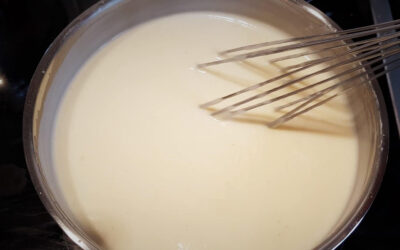
Béchamel or White Sauce
Learn how to make a perfect béchamel sauce, very commonly used in classic Greek recipes like moussaka and pastitsio.